Project 3 · Year 2 · Design Research
VR Resilience Planner
Using an immersive virtual-reality experience to increase people's motivation to take climate-resilience action in their own urban environment.
Summary
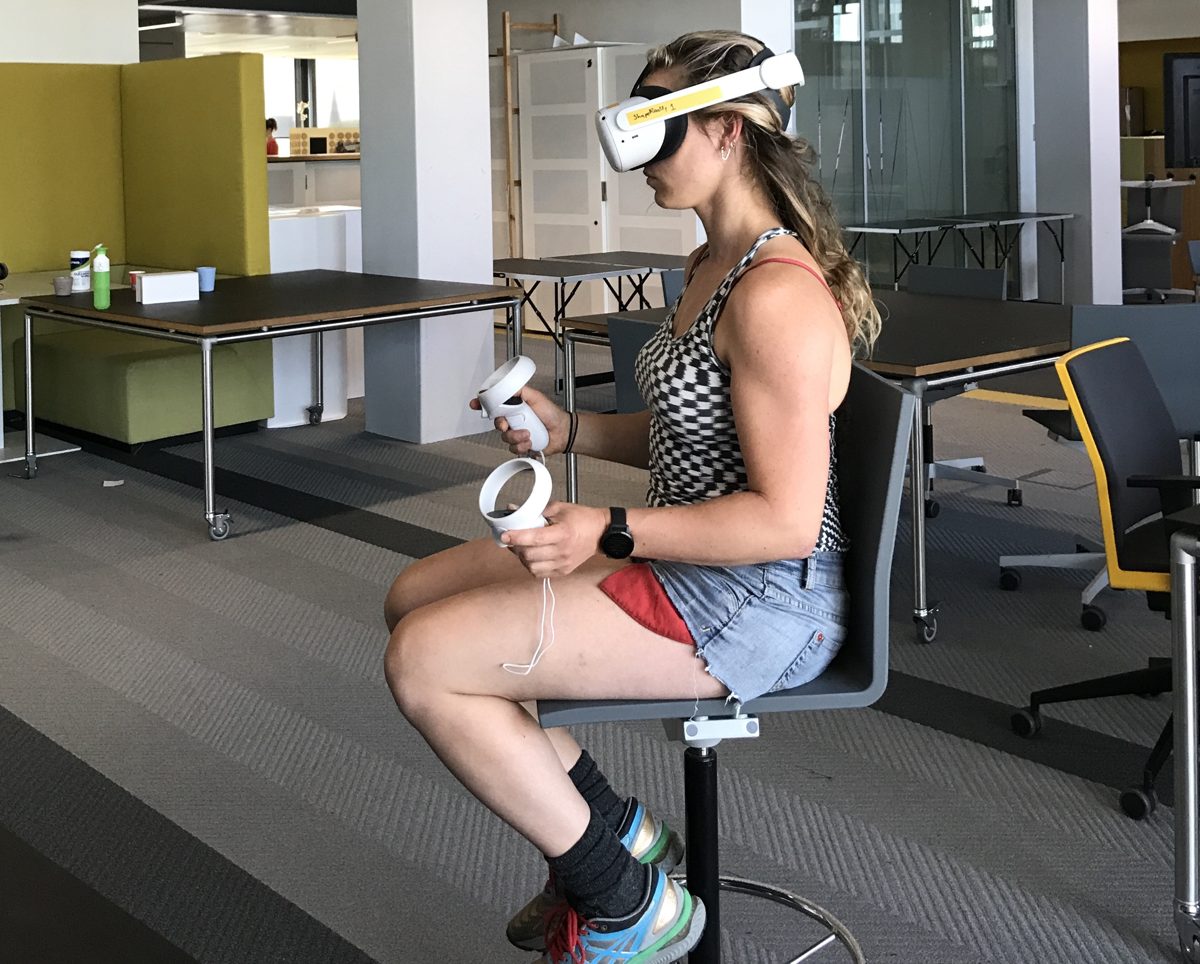
Climate resilience often fails not on technology but on motivation: people do not act because the consequences feel abstract and distant. We built a VR prototype in which participants place climate-resilience solutions into a fictitious Dutch city and immediately see the effect on its temperature, then iterated toward visualisations that extrapolate a user's own heating habits to make the impact personal and legible.
This project taught me a lot. This was a genuinely difficult semester with a late start, weak group dynamics, a board year competing for my time, and a study that ultimately did not produce the data we hoped for. I am not proud of the research quality, but it taught me more about doing research honestly than a direct success would have.
Main learning points
- Data legibility became part of my vision. Testing five visualisation styles showed me directly how representation shapes whether people understand and act.
- Ecological validity matters. Our study did not reflect real behaviour closely enough. I learned to design studies for the context they claim to measure.
- Think ahead about the data a study will actually yield. Several setups could not have produced usable data, this was a planning lesson I carry into every study now.
- Group dynamics are a design variable. Communication and shared ownership mattered more to the outcome than any individual skill.
This project is the clearest example of learning more from a flawed result than a polished one.